



Although vaporization of herbs has been known for hundreds of years, their evaporation in the form as we currently know it, is a relatively new phenomenon, whose genesis dates back to the beginning of the 1990s.
What will you learn from this article?
👉 What did the first vaporizers look like?
👉 How did vaporizers develop over the years?
Table of contents:
What is the history of vaporization?
From this article you will learn what the beginnings of vaporizing herbs were and what vaporizers the first enthusiasts of this form of herb consumption had to master. They didn’t have it easy![1].
Vaporizers [2], i.e. devices used to evaporate the active substances contained in herbs without causing the plant material to ignite, have become extremely popular in recent years.
Although electronic vaporizers appeared at the turn of the 20th and 21st centuries, vaporization of herbs has a much longer history. Herodot already mentioned the practices of vaporizing herbs by the ancient Scythians [3]. At that time, in the 5th century BCE, vapor from herbs was used (instead of water vapor) to power steam baths, in which the ancients enjoyed spending time.
The origins of vaporization, understood as inhaling vapor with the help of a “vaporizer”, have their roots in the areas currently belonging to Afghanistan. It was in this region, around 1500 years ago, that the Hookah [4] was invented, in our country more widely known as shisha [5].
From a technical point of view, the first true vaporizers were precisely water pipes of the Hookah type. The herbs placed in them evaporated due to the heat released by the glowing coal, however, there was no combustion. Over the centuries, Hookah pipes enjoyed great popularity, however, they were separated from modern vaporizers by a technological gulf.
What did the first vaporization look like?
In the 1990s, a certain “Eagle” Bill Amato, an American living in Amsterdam, laid the foundation for vaporization in the form we know it today. Eagle Bill’s first vaporizer [6] became famous through its presentation to the public in 1994 during the Cannabis Cup in Amsterdam.
He was inspired to create his first invention by one of the California growers. What did the first true herb vaporizer look like and how did it work?
First of all, it was huge – in terms of size it could be compared to a medium-sized barrel. It was a large glass vessel with two glass tubes protruding from it. In one of them, dried herbs were placed, which were then heated using a heat gun – the same type as those used to remove paint from walls.
A stream of hot air passed through the herbs, as a result of which vapor was produced, which accumulated inside the glass vessel. Then through the second glass tube one could inhale the vapor accumulated inside. So it was essentially the first convection vaporizer [7]. This invention made an absolute sensation and was displayed in Amsterdam for over 10 years.
Eagle Bill’s next invention was much smaller and aimed at the mass consumer. It was a device called “Shake and Vape” [8], being a glass tube ended with a glass ball with an opening on top. Herbs were poured into the ball through the opening, then a lighter flame was applied to the bottom of the glass ball, as a result of which the herbs evaporated, allowing the vapor to be inhaled through the glass tube.
It was therefore de facto a manual conduction Vaporizer. Both “Eagle” inventions by Bill contributed to the popularization of herb vaporization, as a method allowing for effective absorption of herb properties without causing them to ignite. They also laid the foundation for the emergence of more advanced Vaporizers.
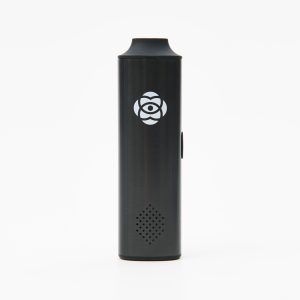







Development of Vaporizers over the years
Another milestone when it comes to Vaporizers was a device called BC Vaporizer. It utilized the idea of a glass sphere, in which vapor accumulated, that is the concept known from the first “Eagle” invention by Bill Amato [9].
However, there were two important differences – first, it was a conduction device [10], where vapor was produced through direct contact of herbs with a heated metal plate. Second, it was an electronic device, not requiring the use of a heat gun or lighter flame.
BC Vaporizer was therefore actually the first electronic stationary Vaporizer. It quickly became very popular in North America and Europe.
The next innovation, when it comes to Vaporizers, came in 2000, when the successful German company Storz & Bickel, which operates to this day, presented to the world the stationary Vaporizer Volcano.
It was a device that for many years set the standards and paved the way for the creation of subsequent, increasingly technologically advanced models.
The uniqueness of Volcano is best evidenced by the fact that this device in 2017 is still sold in mass quantities, and the quality of vapor produced by it is difficult to match. Almost everyone who has had any contact with vaporization associates the vapor-filling Volcano Vaporizer.
After the invention of Volcano, things started to accelerate. First, stationary Vaporizers from other companies appeared, then the world discovered portable Vaporizers currently enjoying the greatest popularity. The first of them was the butane-powered Iolite, whose premiere took place in 2008.
In turn, in 2010 the world discovered Magic Flight Launch Box, being one of the most popular and smallest high-end Vaporizers today. A year later, in 2011, the portable Vaporizer Arizer Solo had its premiere, which set a new standard when it comes to portable devices.
After the premiere and great success of Solo, increasingly electronic Vaporizers began to appear, and the market grew year by year at an increasingly rapid pace.
To date, hundreds of different, more and less successful models have been created. Considering how quickly the Vaporizer industry is developing, the most interesting is probably still ahead of us. One thing is certain: the future belongs to Vaporizers!
Sources:
1. https://vapefully.com/pl/wybor-waporyzatora/waporyzacja-co-to-jest/
2. https://en.wikipedia.org/wiki/Vaporizer_(inhalation_device)
3. https://en.wikipedia.org/wiki/Entheogenic_use_of_cannabis
4. https://en.wikipedia.org/wiki/Hookah
5. https://pl.wikipedia.org/wiki/Szisza
6. https://www.cannabis.info/en/blog/marijuana-vip-eagle-bill
7. https://pl.wikipedia.org/wiki/Konwekcja
8. https://www.cannabis.info/en/blog/marijuana-vip-eagle-bill
9. https://cannabiscultureawards.com/winners/eagle-bill-amato

 (4.7/5)