

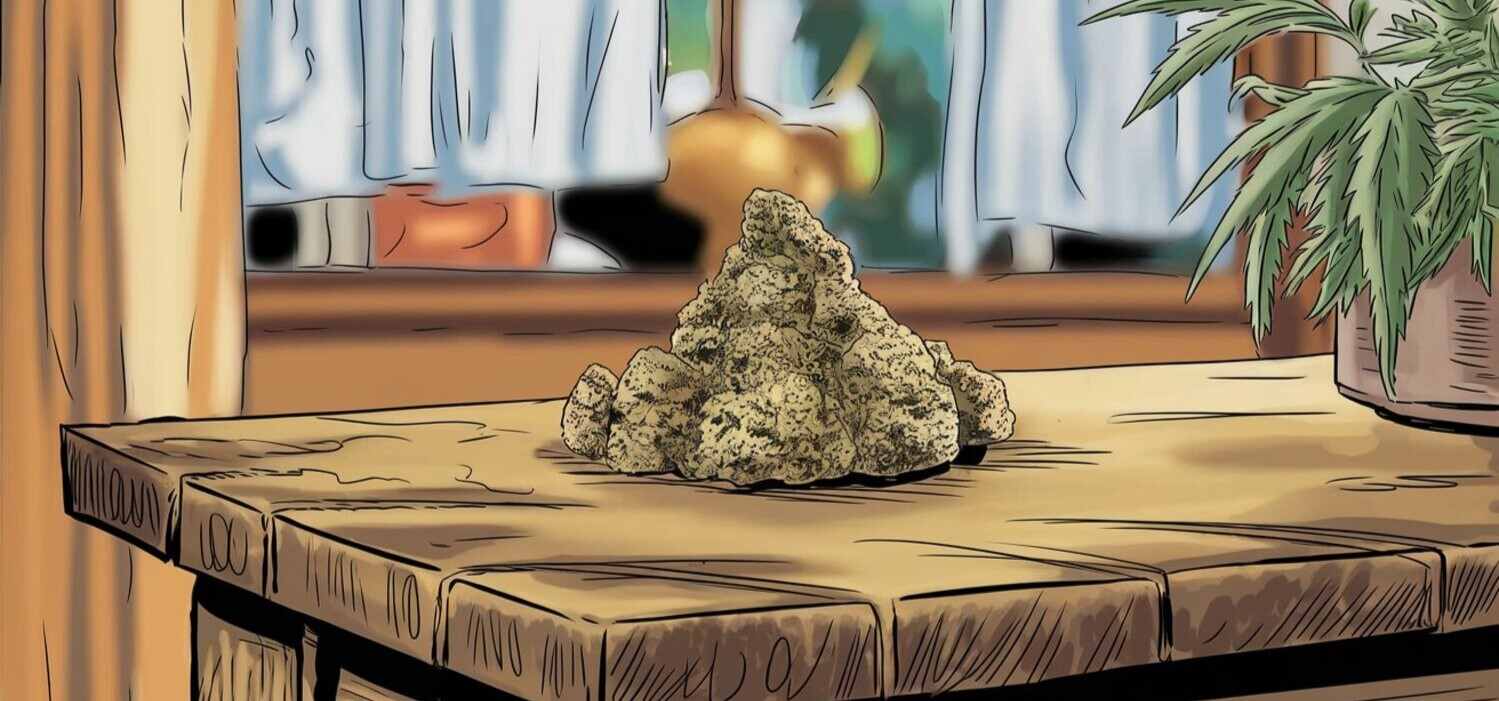
Hash occupies a special place in the cannabis world as one of the oldest forms of concentrate. It is made from resin and from the resin glands of the plant, and it is used both recreationally and, in countries with a medical programme, under prescription. Let’s look at how hash is made, what it looks like, how it smells and what it does. Knowing those things makes it far easier to judge the quality of what you are actually holding.
What you will learn from this article
👉 What is hash and how does it differ from cannabis flower?
👉 What properties and effects does hash have?
👉 How is hash actually produced?
Table of contents:
What is hash? 🍫
Hash, short for hashish, is a concentrated form of cannabis made from the resinous hairs of the plant – the trichomes, which are also its resin glands. Unlike industrial hemp, grown mainly for fibre and seed, drug-type cannabis is rich in THC, the main intoxicating compound. Hash and cannabis flower differ not only in how they are produced, but also in how much THC they contain. The first is a concentrate; the second can be treated as its raw material.
Cannabis flower consists mostly of dried buds. Hash, by contrast, is built almost entirely from trichomes – the tiny resin hairs that carry the highest concentrations of cannabinoids, including tetrahydrocannabinol (THC) and cannabidiol (CBD). The two forms differ in chemical make-up, in how they are used and in the experience they deliver.
While cannabis flower averages somewhere between 8% and 25% THC, hash can reach as much as 60%. That gap is the whole point of the format, and it is why hash has a reputation as the more intense, more concentrated option among experienced users. It also means the same amount of material goes a great deal further.
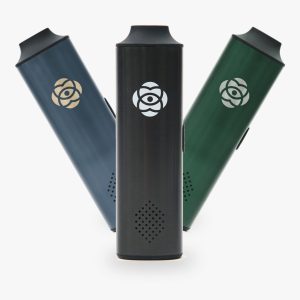
Hash is most often smoked, but a vaporizer gets more out of the same piece.
How is hash made? 🍃
Making hash comes down to collecting trichomes, the resin glands on the surface of the cannabis plant, and then compressing them. There are several ways to do it:
- The sieve method – the oldest and still the most widespread approach to hash making. Plant material is passed over a series of screens with progressively finer mesh. The cannabis is agitated gently on each screen and the trichomes fall through as a fine powder;
- The hand-rubbed method – the plant is pressed and rolled between the palms or with a roller. Heat and friction turn the resin into a sticky coating on the skin, which is then scraped off and shaped by hand;
- Ice water extraction – dried plant material is submerged in ice-cold water and stirred slowly. The cold makes the trichomes brittle and easy to snap off, and they sink to the bottom of a bag that doubles as a very fine filter. The layer that collects in the finest bag, once dried, gives hash of the highest grade available.
Once the trichomes have been separated, they are dried and pressed into blocks, often with heat applied to help the resin bind. Hash carries a high concentration of THC, which makes it stronger than the flower it came from, and it can also contain CBD, a cannabinoid that is not intoxicating and that research is still examining. The effects of hash come from THC acting on the cannabinoid receptors in the brain, which produces the familiar sense of euphoria and relaxation.

What does hash look like? 🥦
Hash comes in a range of forms and colours, depending on the production method and the material it was made from. It can be a soft, pliable block that is easy to shape with your fingers, or a hard, brittle piece that snaps into smaller fragments. The colour varies just as much, usually landing somewhere between dark brown and golden.
Kief, the fine trichome powder that collects in the bottom chamber of a grinder, is the raw material for a large share of hash. Users tend to pay attention not only to the look of a piece but to its texture, which can be smooth and waxy or dry and grainy. That texture matters in practice, because different consistencies behave differently when smoked or vaporized and can shift the flavour noticeably.
Colour and texture are also the first clues to quality. A piece that is uniformly dark, oily and heavily pressed rarely has the same character as pale, sandy, lightly compressed resin.
What does hash smell like? 👃
The smell of hash is one of its most distinctive features. Depending on the source material and the production method, the aroma can go in very different directions. It is most often described as intense and earthy, with resinous and sweet notes underneath.
Some people pick up spice, others something closer to citrus. Those differences come from terpenes, the aromatic compounds naturally present in the cannabis plant. Aroma shapes how a piece of hash is received before anyone has touched it, and it is one of the reasons the same THC figure can mean two completely different experiences. Most of it traces back to the cannabis variety the resin was collected from.
The effects of hash 😮💨
Hash acts in much the same way as cannabis flower, but the higher THC content means the effects arrive harder. The active compounds pass quickly into the bloodstream and bind to the cannabinoid receptors in the brain, which is why the onset feels sharper than with flower. The combination of concentrated THC and terpenes is what accounts for the difference in strength.
Users typically report euphoria, relaxation and heightened sensitivity to sound, taste and touch. The character of the experience is never quite the same twice, because it depends on the variety the resin came from. Hash also varies in terpene profile and in the balance of active compounds, and there are many distinct regional types.
Cannabis resin also appears in a medical context. Medical cannabis is prescribed in a growing number of European countries, and clinical research looks at cannabinoids in areas such as chronic pain, spasticity and sleep problems. Which preparations are available, and for which indications, is decided by the national programme and by the prescribing doctor rather than by the patient.
It is worth keeping in mind that the effects of hash also shift with dose, method of consumption and individual tolerance. Larger amounts can bring unpleasant effects such as anxiety or disorientation, which is a good argument for treating a concentrate with more caution than flower.
Is hash dangerous? 😶🌫️
Like any product containing THC, hash carries risk. Regular use can lead to dependence in some people, and side effects such as anxiety or paranoia are well documented, particularly at higher doses.
Source matters just as much as dose. Material of unknown origin can contain adulterants that have nothing to do with the plant, from plastics and rubber to sand and henna added to bulk out the weight. In the UK that kind of low-grade adulterated resin has long been known as soap bar.
Anyone new to concentrates should be aware that the amount that works with flower is far too much with hash. Start small, wait, and only then decide whether to take more. Moderation is the sensible default here, and it matters most for people without experience.
Hash – is it legal? 🍀
Legality varies from country to country, and hash is almost always treated the same way as the flower it comes from. Germany allows adults over 18 to possess up to 25 g in public and to grow up to three plants at home, with a medical programme that now serves around a million patients. The Czech Republic permits 25 g in public and up to 100 g at home for adults over 21, and has had medical cannabis since 2013. Malta and Luxembourg have their own home-growing rules, and the Netherlands keeps its long-standing tolerance policy for coffeeshops while commercial production stays outside the law. Rules on cannabinoids change often, so anything you read about them has a shelf life.
In countries that allow cannabis for medical or recreational use, users generally have access to a range of resin products through pharmacies or licensed outlets. Elsewhere the picture is very different. Poland treats possession as a criminal matter, although a prosecutor can discontinue proceedings over a small quantity for personal use, and medical cannabis has been available on prescription since 2017. Italy applies administrative sanctions for personal possession and runs a state-supplied medical programme. Slovakia remains one of the strictest jurisdictions in the region, with sentences reaching ten years and no medical programme at all, and Lithuania keeps possession illegal while treating quantities up to 5 g as a non-criminal matter. Check the rules where you actually are before you assume anything.


Hash – summary 🤔
Hash is one of the most interesting cannabis products there is, with a long history and a surprising amount of variety behind a single word. Production method, appearance, aroma, effects, legal status – each of those tells you something different about the piece in front of you.
Hash is a remarkable cannabis concentrate that brings together tradition and the raw strength of the plant. It has a following among recreational users and a place in medicine, and both of those call for a responsible approach to how it is used.
Lucas Cysewski – CEO and founder of VapeFully
Its standing in cannabis culture, including on 420, the day enthusiasts across the world mark their shared interest, says plenty about how deeply rooted the format is. And the medical side of the story, in the countries that have opened up to it, is still being written.

 (4.7/5)