

Coffeeshops are a typically Dutch institution. They bring together people interested in cannabis culture, and while they do sell flower, that is only part of the story. In this article we explain what coffeeshops actually are, how they work and where in Europe you can find them.
What you will learn from this article
👉 What is a coffeeshop?
👉 How does a coffeeshop work?
👉 Where can you find coffeeshops?
Table of contents:
What is a coffeeshop? ☕
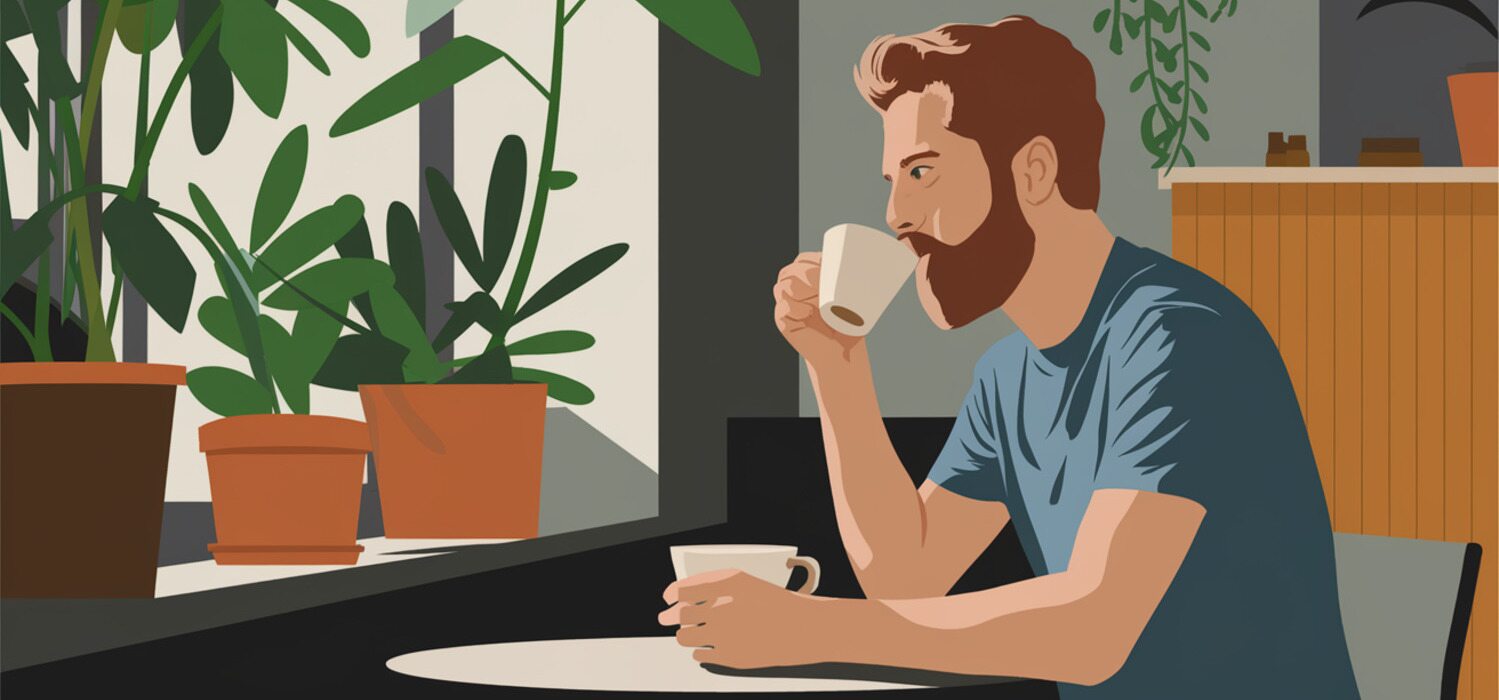
Coffeeshops exist in the Netherlands and nowhere else. Despite the name, they are not places that sell coffee, and they are not cafes in the usual sense. What you buy there is cannabis and products connected with it. They also work as social spaces. Regulars can consume on site, order something to eat and, ironically enough, have a coffee.
In a coffeeshop, relaxation hangs in the air – literally and figuratively.
VapoManiak – professional vaporizer reviewer
Medical cannabis has nothing to do with coffeeshops. In the Netherlands, medical preparations are grown for the Office of Medicinal Cannabis and dispensed by pharmacies against a prescription, and the same split between pharmacy and retail applies in Germany, Italy, Poland and every other European country with a medical programme. Questions such as medical cannabis dosing belong to a doctor, not to the person behind a coffeeshop counter. Medical and recreational cannabis run on two separate tracks. Coffeeshops sit firmly on the recreational one.
Inside, customers get access to a range of strains and forms of cannabis, but only on Dutch territory, and not everywhere cannabis is legal. The Dutch system is built on tolerance, known locally as gedoogbeleid. Selling and possessing small amounts remains formally an offence, yet it is not prosecuted as long as a venue sticks to a fixed set of conditions. That is why the Netherlands is often described as decriminalised rather than legalised, and it explains why the coffeeshop format never spread across the border even to countries that have since relaxed their own laws. Shopping and hanging out in the same room is the part nobody else copied.
How do coffeeshops work? 🥦
A coffeeshop combines a shop counter with a place to sit down and meet people. In the Netherlands, where the model is most developed, these businesses operate under municipal licences and a national set of tolerance criteria, which gives both customers and the market a degree of predictability that grey markets never offer.
Coffeeshops sell sativa, indica and hybrid varieties, along with hash and accessories used to consume them, such as bongs and vaporizers. Each customer may buy a maximum of 5 grams per day, staff check identity documents at the door because the minimum age is 18, and a venue may keep no more than 500 grams in stock at any moment. Advertising is banned outright, which is why shopfronts are so discreet.
Alcohol and hard drugs are not allowed on the premises. Consuming cannabis, including smoking it, is normally permitted, though Dutch tobacco law complicates matters: since indoor smoking rooms were scrapped, joints rolled with tobacco have to be smoked outside, while pure cannabis and vaporizing stay fine indoors. Snacks, soft drinks and coffee are usually on the menu as well.
Coffeeshops are inspected regularly, but for decades the product itself was not tested by anyone, because the front door was tolerated while the back door, meaning the supply, stayed illegal. That gap is now being closed step by step through a state experiment with a closed supply chain, in which licensed growers deliver tracked and laboratory-tested cannabis to shops in ten participating municipalities. Customers are expected to behave decently towards staff and other guests, and aggressive behaviour gets you shown the door.



Which countries have coffeeshops? 🍀
The Netherlands remains the only country with coffeeshops in the strict sense, with roughly 550 licensed venues and the densest cluster in Amsterdam. Even there, access is not uniform: several border municipalities such as Maastricht, Roermond and Terneuzen apply a residency criterion, so only people living in the Netherlands are let in, while Amsterdam does not enforce it. In Canada and in a number of US states you will find outlets offering broadly similar products, but they work differently. They are dispensaries, which means retail only. Sitting down to consume what you just bought is usually off the table.
These outlets give access to various forms of cannabis, including products rich in cannabinoids and THC, which makes for very different consumption experiences depending on where you are. Europe has moved a long way since the Dutch model appeared, yet nobody has reproduced it. Germany legalised possession of 25 grams and home cultivation of three plants for adults in 2024, but supply runs through non-profit cultivation associations rather than shops. Czechia went a similar route with possession and home growing for adults. Malta was first in the EU with non-profit cannabis associations, Luxembourg allows growing at home, Spain has private members clubs that are not open to walk-in tourists, and Switzerland is running city-level pilot trials with tightly controlled sales. Rules differ from one country to the next, and so does the way these places operate.
Coffeeshop prices in the Netherlands 💸
Prices in Dutch coffeeshops depend on location, quality and the type of product. A gram of cannabis in an Amsterdam coffeeshop costs roughly 10 to 15 EUR, and the most sought-after strains can reach 20 to 25 EUR per gram. Hash sits in a similar range, starting at around 9 EUR per gram. Menus are usually priced per gram and per pre-packed bag, and the bags tend to work out slightly cheaper.
Visitors should remember that shops in the centre of Amsterdam charge noticeably more than venues off the main tourist routes. In smaller cities such as Rotterdam or Utrecht, prices are often 10 to 20 percent lower. It is also worth looking at the daily menu, since many coffeeshops run promotions on selected products.
Away from the cannabis itself, drinks cost about the same as in any cafe: 3 to 5 EUR for a coffee, and 4 to 8 EUR for snacks such as cake or a sandwich. Most venues take cash, and many Dutch businesses run on local debit cards while refusing foreign credit cards, so check the payment policy before you walk in rather than at the counter.


Coffeeshops – summary 🍃
Coffeeshops sit at the meeting point of culture, relaxation and the cannabis trade. Many of them offer vaporization, which heats plant material below the point of combustion and therefore produces far fewer of the by-products created by burning. You can also buy vaporizers, water pipes and other accessories on site, usually at tourist prices. A coffeeshop is a place that connects people around cannabis culture on several levels at once.
Before you go, it is worth thinking through whether cannabis is right for you, especially when used recreationally and smoked. Good information beats guesswork here. One practical point for anyone travelling: what is tolerated inside the Netherlands stops at the border, and carrying cannabis into a neighbouring country counts as trafficking, no matter how small the amount or how legally you bought it.
 (4.7/5)
Pretty nice post. I just stumbled upon your blog and wanted to say that I have really enjoyed surfing around your blog posts.
In any case I will be subscribing to your feed and I
hope you write again soon!